


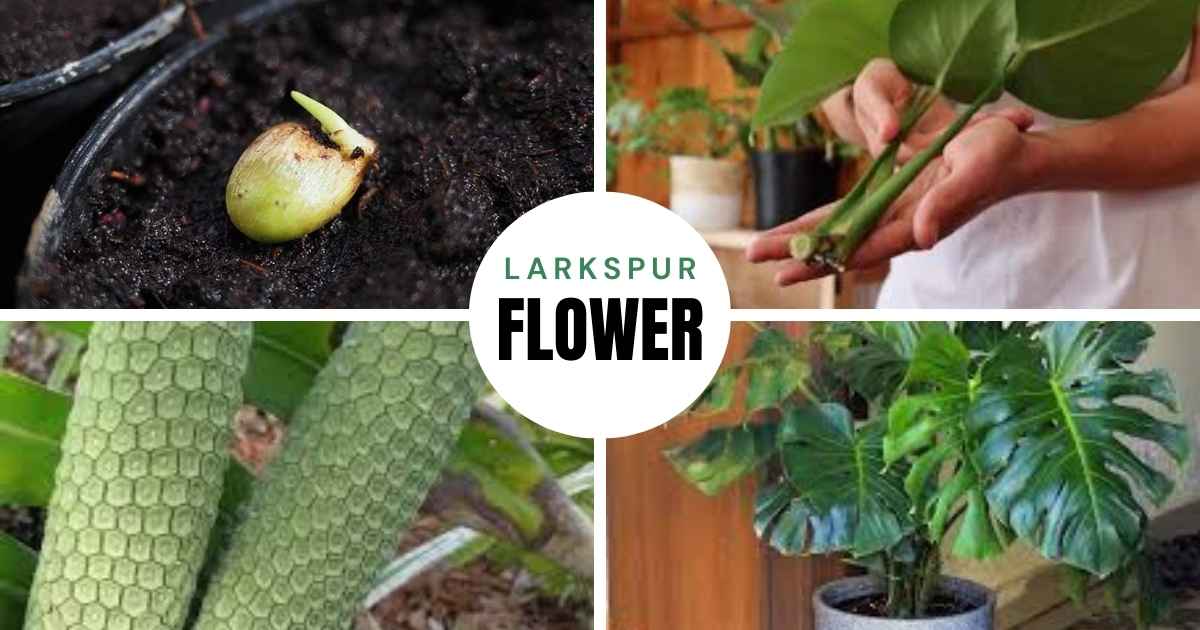
Have you ever considered how to propagate a monstera and create your indoor greenery? You might think that propagating Monstera deliciosa, also known as the Swiss cheese plant, is hard, but it’s not. You can make healthy new monstera plants from just one parent plant if you have the right tools, timing, and method.
This article will cover several propagation methods, provide you with useful tips, and give you actions to take to make sure your propagation task is a success.
How to Propagate Monstera: 7 Proven and Easy Methods for Success
Knowing Monstera: The Fundamentals
Understanding the plant itself is crucial before learning how to propagate monstera.
Scientific Name: Monstera deliciosa
Typical names: Swiss cheese plant, philodendron split-leaf
Native habitat: Central American tropical rainforests
Monstera is a vine that grows quickly and is distinguished by its large, fenestrated leaves. You may share with friends or grow your collection of plants by propagating them.
What Makes Monstera Propagate?
Plant multiplication is only one aspect of propagation.
Here are a few advantages:
- An economical method of expanding your plant collection
- Leggy or overgrown monsteras are rejuvenated
- Growing new plants gives one a sense of fulfillment.
- Wonderful presents for other plant lovers
Tools
Before commencing the monstera propagation technique, acquire these necessities:
- Pruning shears that are quite sharp
- Glass vase or jar, Potting mix
- Rooting hormone
- Clean gloves
- How to Propagate Monstera in Water
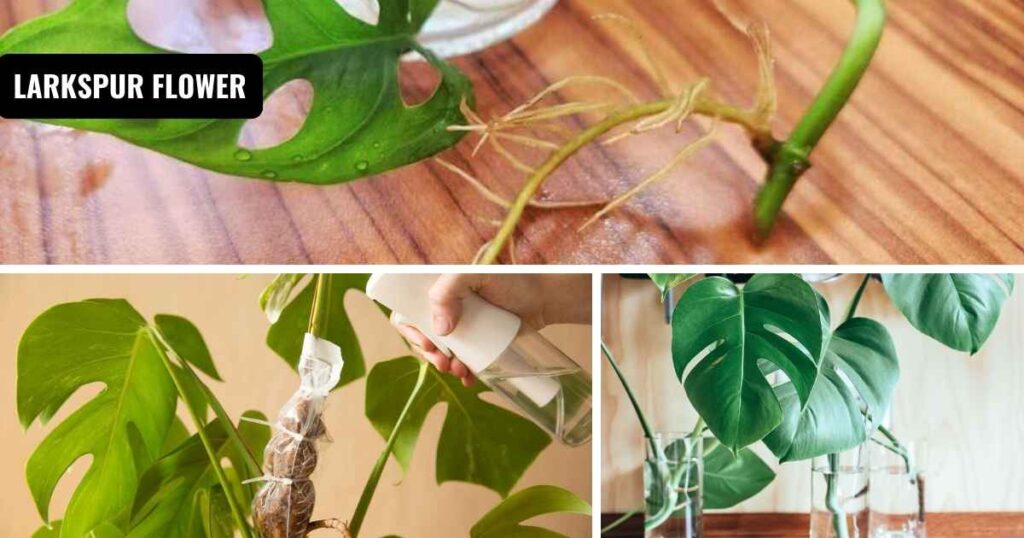
One of the simplest and most often used techniques is water propagation.
- Pick a stem that has one or more aerial roots and nodes.
- Cut just below a node with sterile scissors.
- Put the node in clean, filtered water, but stay away from the leaves.
- Put the container in direct sunlight that is quite bright.
- To maintain the water’s purity and stop bacteria from forming, change it once a week.
- When the roots are 2 to 4 inches long, put them in the ground.
Advantages:
- Easy to maintain
- Excellent for novices
- Observable root development
Disadvantages:
- Shock at the transition to soil
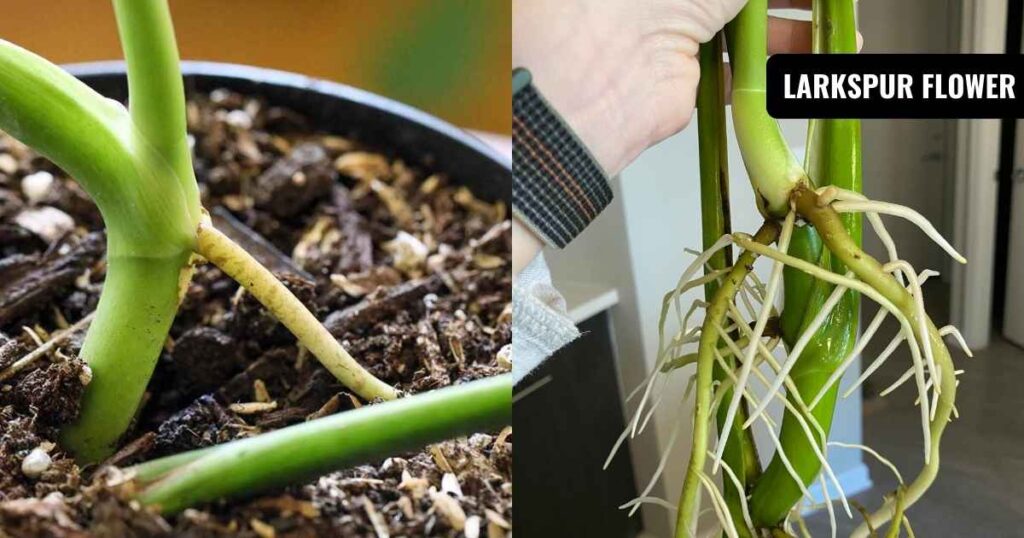
2. How to Propagate Monstera in Soil
Soil propagation plants go right into a potting mix without the water stage.
- Use a mix that drains well, such as peat, perlite, or coco coir.
- There must be a node.
- Helps roots grow faster.
- Push the node down into the earth by one inch.
- Water only a little bit to keep the soil damp, but not too wet.
- Increases humidity, which helps roots grow quicker.
Benefits:
- Encourages stronger roots
- Eliminates the need for a later transplant
Cons:
- Root growth is invisible; results might take longer to show up.
3. How to Grow Monstera via Air Layering
Air layering is the best way to grow mature monsteras.
- Choose a stem that has roots in the air.
- Put sphagnum moss over the node.
- Protect it with thread or twist ties after wrapping it in plastic wrap.
- Maintain the moss moist for three to four weeks.
- Cut below the node to pot it once the roots are exposed.
Benefits:
- A high success rate, a safe process, and little transplant shock.
Disadvantages:
- Requires ongoing moisture control.
- It needs work and time.
4. How to Grow Monstera with Seeds (Rare)
Monstera deliciosa can be grown from seeds; however, it is uncommon.
The Reason It Has Seldom Been Found:
- Slower development in comparison to cuttings.
- Hard to find seeds.
The steps are as follows:
- Soak seeds for 12 to 24 hours.
- Plant in a warm, wet medium.
- Maintain high humidity and light levels.
- Germination may take two to four weeks.
5. Best Time to Propagate Monstera
Spring to early summer is the best time of year to propagate it. Since the monstera plant is actively developing, when growth slows down in the winter, avoid propagating.
6. How Much Time Does Monstera Need to Root?
Estimated Time for Rooting
- In water, monstera take two to four weeks.
- It takes 4–6 weeks in soil.
- Air layering for three to five weeks.
- Seeds germinate in 4–8 weeks.
7. How to Propagate Monstera
- To keep your new monstera healthy, you need to take care of it properly:
- Report the plant when the pot is full of roots.
- Keep the temperature between 65 and 85 degrees Fahrenheit.
- Water regularly, but not soggily.
- Give it strong, indirect light.
- Make sure there is enough airflow.
Avoid mistakes
- Using cuttings devoid of nodes
- Leaving the leaves in the water
- During soil propagation, overwatering
- Spreading in cold or dimly lit environments
- Ignoring rot symptoms (mushy or brown stems)
Conclusion
Learning how to propagate monstera is a fulfilling experience that enables you to produce higher-quality plants with less cost. Care and consistency are essential for a successful propagation, whatever the method you use, soil, water, or air layering. You are now prepared to begin your propagation adventure and take advantage of the lavish advantages of this tropical favorite, thanks to the techniques and ideas provided in this resource.
FAQs
Where do I cut a monstera for propagation?
You should cut the stem below the node for propagation of a monstera, from where leaves and aerial roots emerge. The node is vital for new root and stem development. Each cutting must have a leaf and an existing aerial root for successful propagation.
Is it better to propagate monstera in water or soil?
It is better to propagate monstera in soil. The cuttings rooted in soil have a strong root system as compared to propagating in water.
Where is the node on the monstera?
It is located between the stalk leaf and the main stem. It is essential for successful propagation because it has growing points where new leaves and roots can emerge.
Can I propagate a monstera without a leaf?
For successful propagation of monstera, cuttings should have nodes, axillary buds, and leaves, which are crucial for propagation.
Can I propagate a monstera without a node?
No, a node is crucial for the propagation of a monstera plant.
What is the easiest method to propagate a monstera?
Water propagation is the easiest and most beginner-friendly method for a monstera.
